
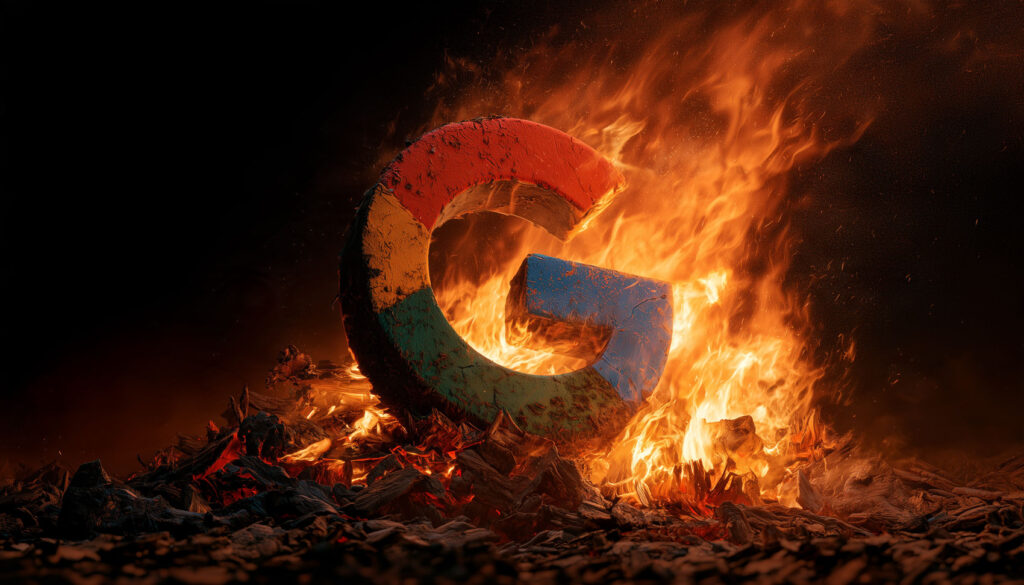
If your traffic dipped or spiked unexpectedly in the last few weeks, you’re not imagining things. Google confirmed a new If your traffic dipped or spiked unexpectedly in the last few weeks, you’re not imagining things. Google confirmed a new Google spam update on August 18, 2026, and the rollout wrapped up by August 21. This is, in fact, the third spam update of the year. March and June also saw similar moves.
For digital marketers, this Google spam update still deserves attention. Google hasn’t announced any new spam policy category. However, it quietly resets the bar for what “clean” content and site behavior look like right now.
What the August 2026 Google Spam Update Actually Did
Google logged the update on its Search Status Dashboard, and confirmed it applies globally, across every language. As a result, the rollout moved fast. It matched March’s spam update, which set the record for the quickest rollout at under 20 hours. That’s noticeably tighter than August 2025’s update, which took nearly a month.
SpamBrain powers every Google spam update. This is Google’s AI-driven spam detection system. Google didn’t publish a new list of banned tactics this time. Instead, Google framed this as a routine sharpening of an existing system, so SpamBrain simply got better at recognizing spam it already knows to look for.
That said, Google did rule out one thing explicitly. This update doesn’t target link spam, and it also doesn’t target site reputation abuse. Separate systems handle both of those instead.
How a Spam Update Differs From a Core Update
It’s easy to lump every algorithm change into one bucket. But a spam update and a core update actually work on different levers.
A core update reshapes how Google judges a site’s overall content quality and relevance. In other words, think of it as recalibrating the entire ranking model. A Google latest update works differently, because it improves the automated systems that detect tactics violating the spam policies. Those tactics include, for example, scraped content, cloaking, keyword stuffing, and doorway pages.
So sites hit by a spam update usually aren’t being penalized for weak content. Instead, Google is penalizing tactics that violate stated guidelines. That distinction matters when you diagnose a ranking drop.
Should You Worry About AI-Generated Content?
Every marketing team asks this question after a Google spam update. The honest answer, though, is that Google hasn’t confirmed either way for this rollout. Back in May 2026, Google clarified something important: its existing spam policies already cover attempts to manipulate AI-driven search features like AI Overviews and AI Mode. That clarification still stands.
Here’s the safer read: this isn’t a new war on AI content. Instead, Google continues to penalize low-effort, manipulative content, no matter who or what produced it.
What to Do If You Were Hit
Did you see a ranking or traffic shift between August 18 and August 21? If so, try this:
- Pull your Search Console data. Then compare performance before August 18 against the period after August 21.
- Re-read Google’s spam policies with fresh eyes. Specifically, check your thin affiliate content, auto-generated pages, and anything built for search engines instead of people.
- Don’t expect a fast recovery. Because Google’s own guidance says improvements can take months to show up in rankings.
- Skip link-related fixes. After all, this wasn’t a link spam update, so that’s not where the problem lives.
The Bigger Pattern Behind This Google Spam Update
Three spam updates in eight months is a fast pace, and most SEOs aren’t used to this cadence. Meanwhile, add the May 2026 core update and the March 2026 core update to the mix, and it’s clear Google is iterating on quality signals more often than in past years. For instance, Search Engine Journal’s coverage of the June rollout noted the same acceleration.
As a result, this changes the operating rhythm for digital marketers. You can no longer just wait for the dust to settle after one big annual update. Instead, build content that would hold up even without any Google spam update: make it genuinely useful, source it well, and write it like someone who actually knows the subject.
Final Takeaway
This Google spam update isn’t a reason to panic. Still, it is a reason to check your house is in order. Google isn’t introducing new rules; rather, it’s getting better at enforcing the ones that have existed for years. If your content has always played it straight, you likely won’t feel this one. But if it hasn’t, remember this: getting away with it has a shrinking shelf life.UI animation tools for modern designs.
0 Comments